

When Freedom Starts Feeling Overwhelming
There is our problem; we believe that if a person has greater freedom and more options, they will be happier. The world is full of dozens of choices today → whether you scroll through streaming catalog lists or decide between hundreds of coffee comps at local cafes. Psychologist Barry Schwartz famously zeroed in on this phenomenon—the “Paradox of Choice.” It is therefore not freedom, but in fact an artisanal way of increased stress and mental fatigue as well, which is only to bring new choices yet permanent dissatisfaction.
The Paradox of Choice: When Freedom Starts Feeling Overwhelming
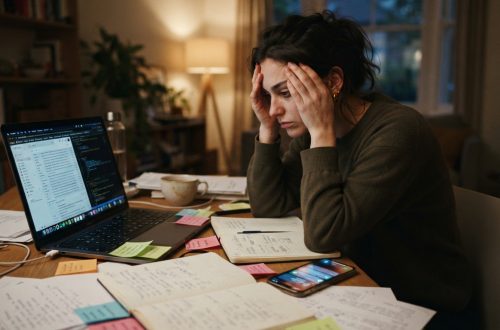
Each and every choice that we make requires cognitive effort. We go through decision fatigue as our brains get flooded with too many choices. By the end of the day, as our mental energy wanes even making small decisions is a slog.
Choice is the bane of our existence because one has to filter through every option out there and that takes too much time and energy—my rendering/solution: Do not get lost in choices. This leads to analysis paralysis, with people wasting hours comparing asinine features instead of actually doing anything or just enjoying the option that they have chosen.
Have you ever felt that of regret and buyers remorse?
Too many options is a high bar for us There is simply nothing else on the table when the stakes are low — a scapegoat for any shortcoming; random chance. Yet offer us tens of alternatives and we blame ourselves for any minor imperfection in our selection.
This dynamic is like a platonic relationship between buyer remorse and instantaneous buyers remorse:
High hopes: So many choices, it is easy to persuade our-self there must be a simple answer somewhere.
Opportunity Cost: The conscious elimination of dozens of alternative temptations.
Guilt: If the selected path turns out sub-optimal, we feel guilty that we have made a bad choice.
Strategies to Avoid Over choice — THE WRONG KINDA PHILOSOPHY
In a world with endless riches beckoning to you, it takes conscious rituals in order to hold your peace of mind and sanity intact.
Adopt “Satisficing”: Rather than optimizing endlessly on one best option to the penultimate atom, pick. The first satisfactorey.
Automating Repetitive Choices: Automate your everyday decisions of what to have for breakfast, wear to work, and workout routine — everything possible is automated so that all the bandwidth reserved for bigger choices.
Limit Your Options on Purpose: When you are working through a direction Compare no more than three options at a time.
The Paradox of Choice: Choosing “Good Enough”

While choice is a wonderful thing, too much choice undermines autonomy. Minimize mental overload and achieve more equilibrium in life by keeping it simple, lowering lofty expectations, go for “good enough” results.
Frequently Asked Questions (FAQ)
Q: Which problem The Paradox of Choice?
A finding known as the Paradox of Choice suggests that greater choice provides an overall benefit, but only up to a point — too many options leads to stress, choice-paralysis and ultimately dissatisfied customers.
Q: How does decision fatigue broken back and limit productivity of people in life every day?
Decision fatigue exhausts you on trivial low-stakes decisions when the day is young so that when it comes to a high-stakes decision, or any complex work or critical problem solving activities in your later-hours, you have very little mental energy and willpower left.
Q: What is the difference between a “maximizer” and a “satisficer”?
Maximizer wishes to see what is the best choice they can have by researching all available choices — this usually causes anxiety satisficer choose any option as soon it fulfills its pre-defined conditions which saves time and mental efforts too.




One comment on “Paradox of Choice : Why Too Many Options Make Us Miserable”
Comments are closed.