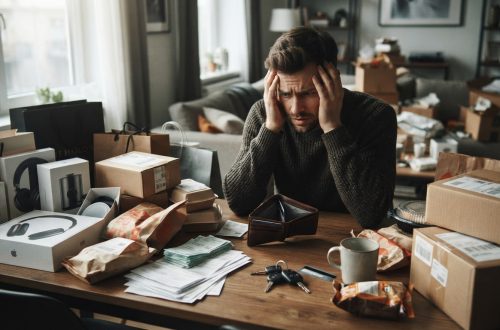
Impulse Buying: Why You Spend and How to Stop
Have you ever left an online shopping experience after 5 minutes because the app was too boring to keep you engaged? If so, did you then switch over to another online retailer? And, have you ever gone into a grocery store to buy a particular item and come out with a cart full of items that you don’t even recall buying? Well, these are the common example of Impulse Buying.
Today many individuals struggle with their impulse to spend money on goods they don’t need. It has become increasingly difficult to manage these impulses as inflation continues to increase the prices of goods and services and as social media advertisements encourage consumers to buy. If you regularly ask yourself “what am I doing wrong?” each time you purchase an item that will sit unused for months or years, or if you feel guilty about making purchases during late-night online shopping sessions, then you are not alone.
To fully understand why people act impulsively with money, you have to go beyond using self-control to keep from acting impulsively. You have to figure out what the major causes are for these behaviors and how people feel about themselves after acting impulsively. Once you can identify why people act impulsively and what can be done to assist them in stopping themselves from acting impulsively in the future, you will once again have control over your finances.
The Core Problem: Why Unplanned Spending Feels Impossible to Resist
The main reason we buy things on impulse is because when we do so, it prevents us from thinking logically about what we wish to buy. On the other hand, if we consider whether we truly want to buy an item before we act, our prefrontal cortex — the area of our brain that is responsible for planning for the future, budgeting, and making logical decisions — will assess the positive and negative aspects of purchasing that item.
Impulse buying is a process where a person switches from rational decision making using the rational part of the brain (prefrontal cortex) to irrational decision making using the irrational part of the brain (limbic system). An impulse purchase can change a previously unnecessary product into a present day emotional need. Online and brick and mortar retailers are aware of consumer behavior when making impulse purchases. They are spending billions of dollars developing and optimizing checkout systems; creating limited time promotional offers; and designing their physical spaces to exploit chemical responses occurring in the brain.
If you feel excessive amounts of anxiety, stress, loneliness, or excitement, your brain tries to find ways to temporarily reduce the amount of emotional pain you are experiencing. Shopping can serve as an interim way to deal with the effects of those feelings.
The Psychology Behind Impulse Buying

Individuals that generally make smart financial choices can sometimes make impulsive purchases. A few examples of these types of impulsive purchases are:
The Dopamine Trap (Instant Gratification)
Dopamine chemicals are released into your brain when you locate something that you would like to purchase and also when you make the decision to finalize the purchase. Many individuals will experience a greater chemical release of dopamine while thinking about receiving the product, compared to experiencing a chemical release of dopamine after they have received the product. Therefore, the excitement of having the product is typically reduced dramatically once it arrives at your home. This can lead to buyers remorse and a decrease in funds available in your bank account.
Cognitive Biases and Mental Shortcuts
When we must make a decision quickly, our brain utilizes short-cuts. There are two major biases in impulse buying.
Present Bias- This refers to the tendency for individuals to choose immediate rewards or satisfaction. When making choices about future actions rather than choosing a longer-term reward that would provide more value. Making an immediate decision is often easier because it provides immediate reward. However, planning for future actions takes time and effort.
Scarcity and FOMO- When a user sees a banner ad that says something like, “Only 2 left!” or “Sale ends in 1 hour!”, the user is being manipulated into believing they have limited time to buy the advertised product. At this point, the user is not thinking about if they actually want or need the product. Instead, the user is worried about missing out on purchasing the product before it is gone.
Frictionless E-Commerce Design
Today, there are no “barriers” to purchasing items. Previously, customers would spend some time thinking about what they wanted to buy before they wrote a check, counted cash, etc. However, today customers can use their saved credit card numbers to buy products with only one click or use their mobile wallet to allow their brain to continue processing without being interrupted.
Actionable Solutions: How to Break the Impulse Buying Habit

The process starts by realizing there is an issue. To alter your spending behavior long-term, you must intentionally set up barriers in your everyday existence. The following are some ways to prevent impulsive shopping:
- If you find a non-essential product that you want to buy, wait two days before making the decision. Once the initial enthusiasm for purchasing the product has worn off. You will likely realize that you do not need to make the purchase.
- To help increase “friction” when checking out, please delete all saved credit card information from both your web browsers. And your mobile devices’ applications. When you do this, you will have time to consider what you are buying prior to entering your 16-digit credit card number.
- The number of hours you will have to work, after tax deduction, to pay for a product with the remaining funds in your possession prior to purchasing the product is calculated. When you see a product (such as a coat) being offered at a price equal to the number of hours you work each day, it will dramatically alter your perception of that particular product.
- Track your feelings after deciding to buy a product right away. Then, determine what caused you to feel an emotion about the purchase. In addition to dealing with the negative emotions. Such as work-related stress, boredom on a Saturday night watching television, or isolation in ways other than buying products to alleviate these feelings.
Conclusion
Why do some individuals make impulsive purchases? It’s not because they lack good decision-making skills. Individuals who make impulsive purchases are influenced by the effective marketing strategies used by companies. That use psychological and emotional factors to influence consumer behavior. When you realize the impact of the dopamine loop on your buying patterns. The use of artificial scarcity by businesses to induce immediate purchase decisions. And the establishment of barriers friction to deter you from making impulsive purchases. You will have a better understanding of how to manage the negative impacts of impulsive purchases on your finances. Being financially self-sufficient does not mean that you can’t reward yourself; it means that you will make deliberate and conscious choices about what gives you pleasure.
Frequently Asked Questions about “Impulse Buying”
Q: Why do I shop when stressed?
It triggers a quick dopamine release, offering temporary emotional comfort.
Q: Is impulse buying a disorder?
The act of buying is occasionally normal, but when an individual’s buying habit becomes excessive and uncontrollable. It could potentially be a form of compulsive buying disorder.
Q: How do I stop online impulse buying?
Delete your stored payment card data, stop receiving promotional emails, and delay checking out for 48 hours.