
The Man Who Built a Global Automotive Empire from His Garage
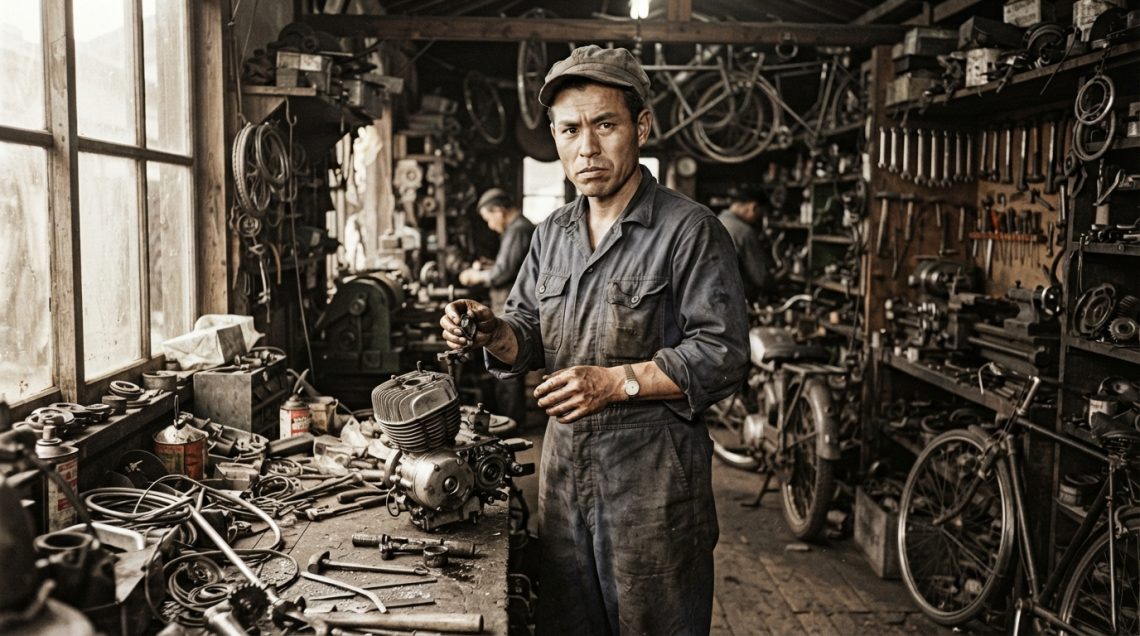
It would be one of industrial history’s greatest inspiring stories — and it would require Honda Motor Co. Say this on the engine block and that is your mass of obsession with gunk, grease, gears and even engines — Soichiro Honda; Guy who built the massive automotive empire of the world. Soichiro was no corporate executive—he was a mechanic with a relentlessness and refusal to accept failure that changed the very streets of modern manufacturing.
Catalytic Converter Why a Village Blacksmith Became a Giant in Automotive Industry
Soichiro was born in Hamamatsu, Japan on November 17, 1906 and has always had a fascination with machinery since he was little. He learned things such as a work ethic and engineering pragmatism while working with his father in a bicycle repair shop. At 15 he relocated to Tokyo, where he began an apprenticeship at auto repair shop Art Shokai.
Soichiro was not merely a mechanic — he had an almost superpower-like instinct for what engines wanted. In his twenties, he was forming race cars and filing patents on unique design improvements. He first tried to mass-produce piston rings, which failed; so back to University where he learned more about metallurgy and his techniques improved until they were sold off to Toyota. That resolve set the stage for what followed.
Soichiro Honda and the Birth of Honda Motor Company
World War II left Japan with huge fuel shortages and disrupted transport infrastructure. Seeing an opportunity to assist average people, Soichiro bought small surplus generators and hooked them up to bicycles. A runaway success, the powered bikes provided developed an entry level cheap means of transport to a recovering nation.
Soichiro founded Honda Motor Co in 1948, probably joined soon after by the more pragmatic genius businessman Takeo Fujisawa. Fujisawa would handle finances and marketing, leaving Soichiro free to devote himself 100 percent to engineering and product development as the arrangement achieved almost mythical status.
The two organizations collaborated on the launch of Honda Super Cub in 1958. Lightweight frame, automatic clutch, bulletproof engine make the Super Cub the best selling motor vehicle of all time—and launch Honda.
Conquering the Automobile World
Soichiro did not stop simply with two wheels. Things took an uptick for Honda in 1963 when it introduced its first production car. The S500 sports car, along with the T360 mini-truck. Despite resistance from Japanese government officials who were trying to keep automaker competition down.
Honda’s greatest success came in the early 1970s and with its development of the Compound Vortex Controlled Combustion (CVCC) engine. It was a difficult time for bigger multinational automakers, because the United States had passed aggressive emissions regulations. And Honda’s CVCC engine astonished the automotive community by being able to meet these regulations without using a catalytic converter!
By 1970, Honda was a powerhouse of its own in fuel economy, reliability and engineering innovation with the debut of the Honda Civic and Honda Accord.
A Maverick Mechanic’s Legacy
Soichiro Honda retired from day-to-day operations in 1973. But his approach to mechanics remains well entrenched in the corporate soul of Honda. He believed that one learns through failure. And he threw caution to the wind and gave young talent a chance at things, believed in ground-up execution over consensus building.
Today, Honda has become an internationally recognized name and proves what can be accomplished with blind passion coupled with straightforward tenacity. Soichiro was as a grease-pit mechanic with big ideas And he proved that everything is possible —He redefined how we travel in this world.
Frequently Asked Questions about Soichiro Honda
Q: What was Soichiro Honda’s first inventions?
He began his first billionaire run attaching surplus radio generator engines to bicycles, a cheap form of motorized transport for post-WWII Japan.
Q: What did Soichiro Honda think of failure?
Soichiro famously saw failure as a stepping stone for success saying that. “Success is the 1% of your work which results from 99% of it being failure.”
Q: Why was the CVCC engine significant for Honda?
Honda gained international recognition as an engineering innovator when the CVCC passed tough U.S. Clean Air Act standards in the 1970s with no catalytic converter necessary.



One comment on “Soichiro Honda: From Garage to Global Empire”
Comments are closed.