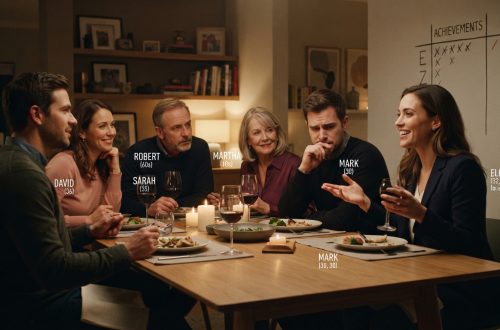
What Family Patterns Repeat for Generations and How to Break Them
Has there ever been a time when you reacted or a day after to something, and thought, “I just sound like my parents”? You are not alone. A lot of us can see patterns of relationship choice, emotional habits and coping styles playing out across generations within the same family. Recognizing why family patterns recur from generation to generation is the beginning of awareness and change. These recurring cycles are seldom deliberate. Rather, powerful psychological, behavioral, and relational forces shape these patterns and pass them through generations.
Family Patterns and Early Attachment
We learn our most basic meta-model of how the world works from our primary caregivers. From a young age we watch our parents navigate stress, show love, sort through conflicts and deal with hard feelings. Your early environment shapes your attachment style. If you grew up in a home where everyone avoided conflict, you may retreat during arguments as an adult.
On the flip side, having adapted to an unpredictable environment may make anxious attachment in adult relationships arise. We recreate what is familiar even when that familiarity actually doesn’t feel the best.
Unspoken Family Rules and Expectations
All families are governed by unstated laws. Laying out rules for how family members communicate, express feelings, or react to success and failure.
Common unspoken rules include:
- Emotional Suppression: Hiding your feelings in order to avoid a conflict within the household.
- Family Role: The “caretaker”–the child that takes care of their parents, the “achiever” (the eldest or the golden child) and the peacemaker (who keeps the family balance).
- Conflict Styles: Managing conflicts by giving the silent treatment instead of talking about things.
Closed systems are the most pernicious; we internalize those rules because they often go unspoken and then repeat them within our own adult households.
Transgenerational Emotional Dynamics

Family systems theory proposes that these emotional patterns flow like an invisible current through generations. The grief, loss or hardship that remains unresolved with grandparents or parents can continue to shape many generations after.
If a parent habitually avoided dealing with past difficulty, it will have become automatic, unconsciously impacting how they parent. Usually, this leads to a cycle of coping mechanisms being passed down among family narratives.
How to Break Unhealthy Family Patterns

Understanding that family patterns repeat through generations does not make you fated to repeat them. You can consciously decide so you might create better patterns:
- Observe Your Automatic Behavior: Notice the habitual reactions you have when you are under attack or experiencing a conflict.
- Figure out the Origin: This will challenge you to question whether a behavior is present in your life or if it was part of an old family schema.
- Set Firm Ground Rules: You should be able to identify the positive form of communication and healthy emotional release for you.
- Therapy: Process some of the damages from your past and create a new set of tools for relational living.
FAQ Section
Q: Why do we repeat the same negative patterns from our parents?
Negativity is regularly repeated due to its familiarity and predictability. Psychological conditioning, formative attachment styles and triggers to unprocessed stress coalesce to make these behaviors seem like second nature martyrdom, even when it is doing others harm.
Question: Is trauma really hereditary?
Yes, behavioral responses, emotional coping mechanisms, and parenting styles can be inherited. Laurence Heller and Aline LaPierre explained how one generation that has not resolved their traumas creates the emotional environment for the next.
Q: I want to prevent repeating family patterns in my own relationships. How to stop repeating cycles?
You can break these cycles by becoming aware of your emotional triggers, learning healthy communication skills, and seeking therapy when necessary.
Q: Will family patterns change if change is experienced by one member only?
Yes. Family dynamics depend on each other. Differential coping, setting boundaries or communication by one alters the individual component that is reaction in a system a nuclear family, this has an inflationary and deflationary effect.
Conclusion
Emotional habits and relationship styles are notorious for running in families. However, awareness gives you choice. Understanding the reasons for imprinted family patterns means you can hold onto what was good in your family ancestral survival skills, while consciously adjusting the behaviors that will lead to greater quality of life.