Two Worlds Inside the Same 24 Hours
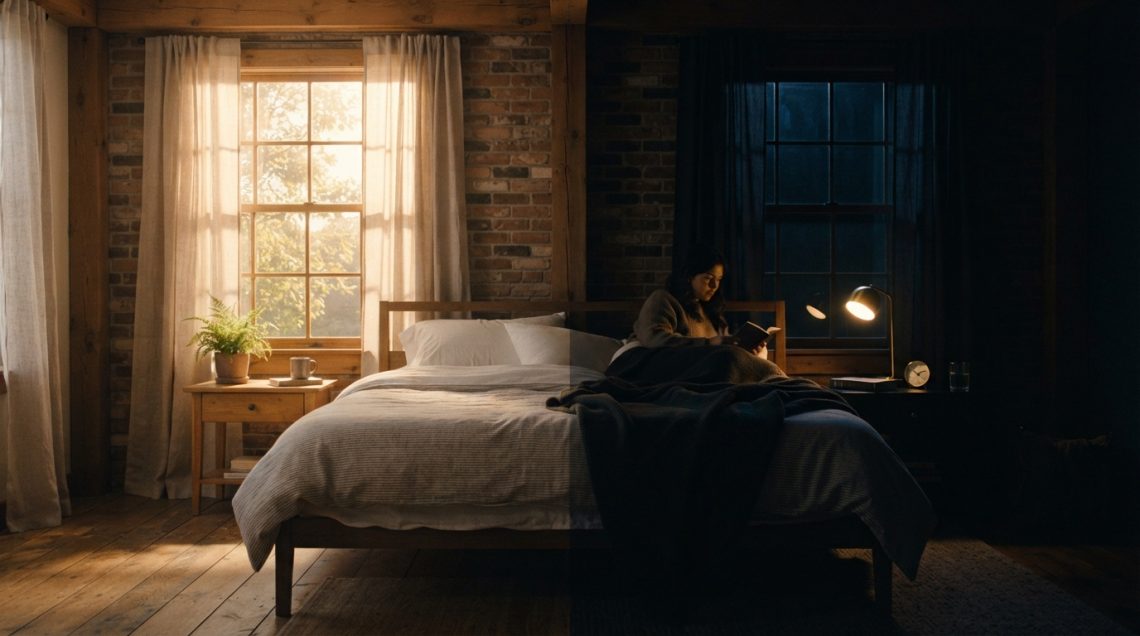
Have you ever noticed the way a room feels at 7:00AM and how it feels at11:00PM? Early morning sunshine vs. late night sunlight moving is one part of it, but it goes way deeper than that. Our experience of the start or end of each day is created by biologically clumped timescale on a typological basis, mental energy ratio and what environmental cues are at our disposal.
Let me answer in a scientific and psychological way why mornings, and nights seem to belong on different planets.
How Circadian Rhythm Changes Your Energy, Morning vs Night
Our body has some biological timeline also called as circadian rhythm. Thus, light enters the morning and your brain gets ready to call for a little bit of cortisol—a hormone that enhances alertness and energy so you can come out ready to take up opportunities.
This is reverse to what takes place at night. Melatonin is released and your body de-stresses and goes to sleep in darkness Biological rhythms change the way you perceive time and energy.
Decision Fatigue and Cognitive Load
It wakes your brain up after your sleep. You are a whole battery of knowledge and what you get first thing in the morning is more dazzling.
Night settles in and you have been doing decision after decision all day already, processing actual hand-to-hand combat (N-1) up to M times the size of your daily tangle with new data. This phenomenon called decision fatigue, of producing mental fatigue along with this time, too — nighttime can be heavier quiet or more tiring moments.
Environmental Atmosphere
What up next alters the dynamics of play:
Mornings : The Slow Wake Up, birds chirping, diffused sunlight and all of us waking up like each other.
The nights : Quiet little sleeper, where the light is kinder and the pace slows down a bit for some more thinking or eating.
These environmental signals also unintentionally disturb your mentality and attention.
Morning vs Night: Finding Your Natural Rhythm

Mornings are for hope, work activity and possibilities; evenings — reflection, rest, wind-down. So you marry heavy hitters type work with sparkly-first thing morning energy whilst making room for long hours to rest.
Frequently Asked Questions (FAQ)
Q: Why I’m but more creative person in night not day?
It’s a little bit drowsy at night, your brain doesn’t really have the filters its been more flexible and less committed to what you believe life should be like.
Q: How can I make my mornings feel less overwhelming?
If you prepare the night before — get your clothing out, declutter your work desk and make a list of what needs to get done that day — you wake up with minimum decision fatigue every day?
Q: At night time why do problems seem so much bigger?
It also seems that mood regulation is harder when fatigue levels are high and cognitive control —when we process specific problems to create solutions—is low as in the particularly pronounced worries of those late at night.